It looks like there’s a small typo in the keyword (“doigital” instead of “digital“). If your SEO target keyword is intentionally “doigital marketing guide”, I can use it exactly as provided. Otherwise, I recommend using the correct keyword “digital marketing guide” for better search performance.
Digital Marketing Guide: The Complete Beginner to Advanced Guide for 2026
Introduction
In today’s fast-paced digital world, businesses of every size need a strong online presence to remain competitive. Whether you’re a startup, a small business owner, a freelancer, or a large enterprise, understanding digital marketing is no longer optional—it’s essential. This digital marketing guide will help you understand the fundamentals, strategies, tools, and best practices needed to grow your brand online.
From search engines and social media to email campaigns and paid advertising, digital marketing offers numerous opportunities to connect with your target audience. Unlike traditional marketing, digital marketing allows businesses to measure results, optimize campaigns, and achieve a higher return on investment (ROI).
This comprehensive digital marketing guide covers everything from the basics to advanced techniques, making it suitable for beginners and experienced marketers alike.
What is Digital Marketing?
Digital marketing refers to promoting products, services, or brands using digital channels such as:
- Search Engines
- Websites
- Social Media Platforms
- Email Marketing
- Mobile Applications
- Online Advertising
- Content Marketing
The primary goal of digital marketing is to reach potential customers where they spend most of their time—online.
Unlike traditional marketing methods such as newspapers, television, or radio, digital marketing enables businesses to communicate directly with their audience through personalized experiences.
Why is Digital Marketing Important?
A successful digital marketing guide always starts by explaining why digital marketing matters.
1. Global Reach
Businesses can reach customers worldwide without opening physical stores.
2. Cost-Effective Marketing
Compared to traditional advertising, digital marketing requires a much smaller investment.
3. Better Targeting
You can target users based on:
- Age
- Gender
- Interests
- Location
- Online behavior
- Purchase history
4. Measurable Results
Track every campaign using analytics tools.
Metrics include:
- Website visitors
- Clicks
- Conversions
- Sales
- Bounce Rate
- ROI
5. Higher Conversion Rates
Optimized digital campaigns generate more qualified leads than traditional advertising.
Main Components of Digital Marketing
1. Search Engine Optimization (SEO)
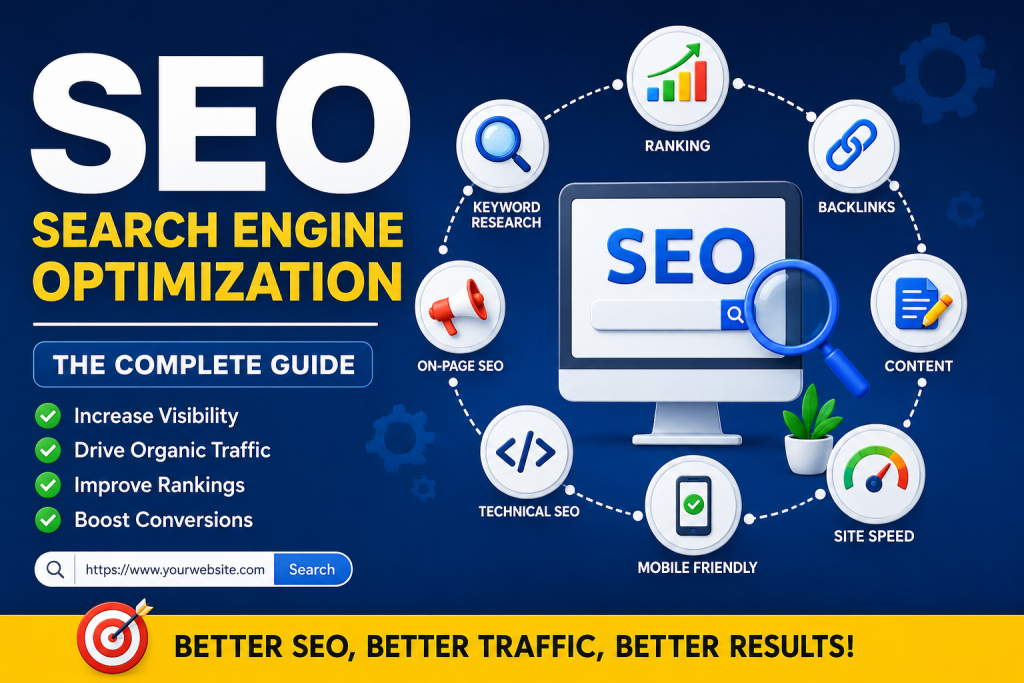
SEO helps websites rank higher in Google search results organically.
Types of SEO
On-Page SEO
Includes:
- Keyword Optimization
- Meta Titles
- Meta Descriptions
- Header Tags
- Internal Linking
- Image Alt Text
- Content Optimization
Off-Page SEO
Focuses on:
- Backlinks
- Brand Mentions
- Guest Posting
- Social Sharing
Technical SEO
Includes:
- XML Sitemap
- Robots.txt
- HTTPS
- Core Web Vitals
- Mobile Friendliness
- Site Speed
SEO remains one of the most important sections in every digital marketing guide because organic traffic is sustainable over the long term.
2. Content Marketing
Content is the foundation of digital marketing.
Content marketing includes creating valuable content that educates, informs, or entertains users.
Examples include:
- Blog Posts
- Videos
- Infographics
- Podcasts
- Case Studies
- E-books
- Whitepapers
Good content increases:
- Organic traffic
- User engagement
- Brand trust
- Search rankings
3. Social Media Marketing
Social media platforms help businesses connect directly with customers.
Popular platforms include:
- YouTube
- X (Twitter)
Benefits include:
- Brand awareness
- Community building
- Customer engagement
- Lead generation
- Website traffic
4. Pay-Per-Click (PPC) Advertising

PPC is paid advertising where businesses pay when someone clicks on their ad.
Popular PPC platforms include:
- Google Ads
- Facebook Ads
- Instagram Ads
- LinkedIn Ads
- Microsoft Ads
Advantages include:
- Instant traffic
- Fast lead generation
- High targeting accuracy
- Measurable ROI
5. Email Marketing
Email marketing remains one of the highest ROI digital marketing channels.
Businesses use email for:
- Newsletters
- Promotions
- Product launches
- Customer retention
- Cart abandonment emails
Best practices:
- Personalize emails
- Write compelling subject lines
- Include clear CTAs
- Segment your audience
- Test different campaigns
6. Affiliate Marketing
Affiliate marketing allows others to promote your products for a commission.
Benefits:
- Low risk
- Performance-based
- Increased reach
- Better sales opportunities
7. Influencer Marketing
Brands collaborate with influencers who already have loyal audiences.
Benefits include:
- Brand credibility
- Increased trust
- Better engagement
- More conversions
8. Mobile Marketing
Most internet users browse using smartphones.
Mobile marketing includes:
- SMS campaigns
- Mobile apps
- Push notifications
- Responsive websites
- Mobile-friendly emails
Steps to Create a Digital Marketing Strategy
A complete digital marketing guide should include strategic planning.
Step 1: Define Your Goals
Examples:
- Increase website traffic
- Generate leads
- Boost sales
- Build brand awareness
- Improve customer retention
Step 2: Know Your Audience
Research:
- Demographics
- Interests
- Pain points
- Buying behavior
Step 3: Analyze Competitors
Study competitors to understand:
- Keywords
- Content strategy
- Backlinks
- Advertising
- Social media engagement
Step 4: Choose Marketing Channels
Not every platform suits every business.
Select channels based on your audience.
Step 5: Create High-Quality Content
Content should solve customer problems.
Focus on:
- Educational blogs
- Videos
- Tutorials
- FAQs
- Guides
Step 6: Optimize for SEO
Research keywords.
Optimize:
- URL
- Headings
- Meta title
- Meta description
- Images
- Internal links
Step 7: Promote Content
Share content through:
- Social media
- Email newsletters
- Communities
- Forums
- Paid ads
Step 8: Track Performance
Use analytics tools regularly.
Monitor:
- Traffic
- Bounce Rate
- Conversion Rate
- Engagement
- Revenue
Best Digital Marketing Tools
SEO Tools
- Google Search Console
- Google Analytics
- Ahrefs
- SEMrush
- Moz
Keyword Research
- Google Keyword Planner
- Ubersuggest
- AnswerThePublic
Email Marketing
- Mailchimp
- ConvertKit
- Brevo
Social Media
- Buffer
- Hootsuite
- Later
Graphic Design
- Canva
- Adobe Express
Benefits of Digital Marketing
Businesses gain numerous advantages by following this digital marketing guide.
Benefits include:
- Increased brand visibility
- Higher website traffic
- Better customer engagement
- Improved lead generation
- Cost-effective advertising
- Better customer insights
- Increased sales
- Higher ROI
- Long-term business growth
Common Digital Marketing Mistakes
Avoid these mistakes:
- Ignoring SEO
- Publishing low-quality content
- Not tracking analytics
- Poor mobile optimization
- Keyword stuffing
- Slow website speed
- No clear CTA
- Ignoring email marketing
- Inconsistent branding
Digital Marketing Trends in 2026
Stay updated with these trends:
AI-Powered Marketing
Artificial intelligence helps automate campaigns, personalize content, and improve customer experiences.
Voice Search Optimization
Optimize content for conversational queries.
Video Marketing
Short-form videos continue to dominate engagement.
Interactive Content
Quizzes, polls, and calculators increase user interaction.
Personalization
Customers expect personalized experiences.
First-Party Data
Businesses increasingly rely on customer-owned data as privacy regulations evolve.
How to Measure Success
Important KPIs include:
- Website Traffic
- Organic Traffic
- Keyword Rankings
- Click-Through Rate (CTR)
- Conversion Rate
- Customer Acquisition Cost (CAC)
- Return on Ad Spend (ROAS)
- Customer Lifetime Value (CLV)
Tips for Beginners
If you’re just starting with this digital marketing guide, keep these tips in mind:
- Learn SEO fundamentals.
- Create valuable content consistently.
- Build an active social media presence.
- Focus on one or two channels initially.
- Track results with analytics.
- Test different marketing strategies.
- Continue learning because digital marketing evolves constantly.
Frequently Asked Questions (FAQs)
What is digital marketing?
Digital marketing is the practice of promoting products or services through online channels such as search engines, social media, email, websites, and paid advertisements.
Is digital marketing suitable for small businesses?
Yes. Digital marketing is affordable, measurable, and scalable, making it an excellent choice for businesses of all sizes.
How long does SEO take?
SEO is a long-term strategy. Results typically begin appearing within 3–6 months, depending on competition and website quality.
Which digital marketing channel gives the best ROI?
Email marketing often delivers one of the highest ROIs, while SEO provides sustainable long-term organic growth. The best channel depends on your business goals and target audience.
Do I need a website for digital marketing?
While some businesses can market through social media alone, having a website improves credibility, provides full control over your content, and supports SEO and lead generation.
Conclusion
Digital marketing has transformed the way businesses attract, engage, and retain customers. By understanding the core components—SEO, content marketing, social media, PPC, email marketing, and analytics—you can build a strategy that delivers measurable results.
This digital marketing guide provides a strong foundation for beginners while also offering valuable insights for experienced marketers. Success in digital marketing requires consistency, creativity, continuous learning, and data-driven decision-making. As technology evolves and consumer behavior changes, staying updated with the latest trends and best practices will help your business remain competitive and achieve sustainable growth.
Whether your goal is to increase website traffic, generate qualified leads, or boost online sales, following the strategies outlined in this guide will put you on the path to long-term digital success.